2024 World Air Quality Report
Here’s a summary of the latest global air-quality situation, based primarily on the IQAir “2024 World Air Quality Report” and other major sources.
🌍 Key global findings



-
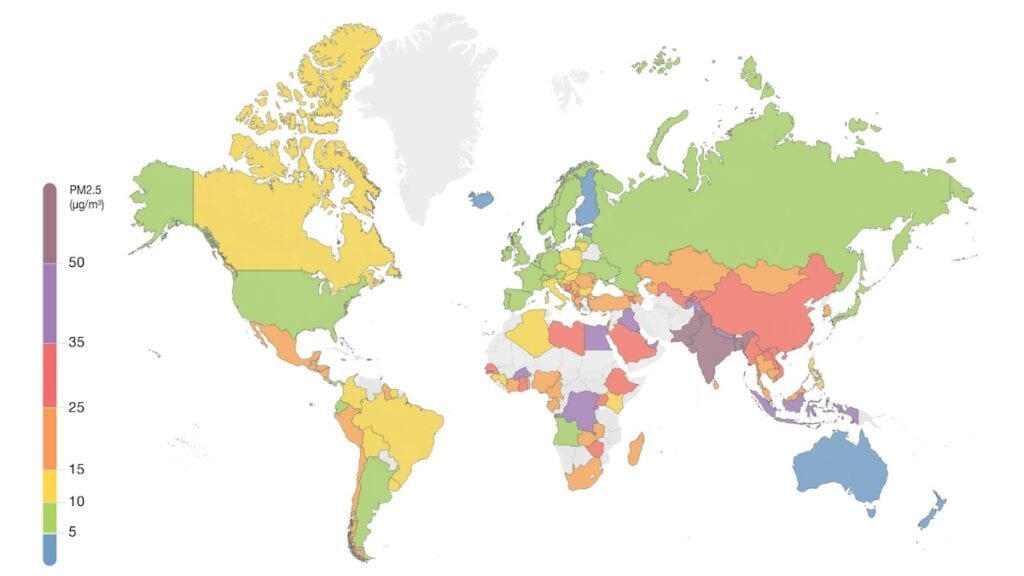
The IQAir report states that only about 17% of cities worldwide meet the safe levels for fine particulate matter (PM₂.₅) as set by the World Health Organization (WHO) guidelines.
-
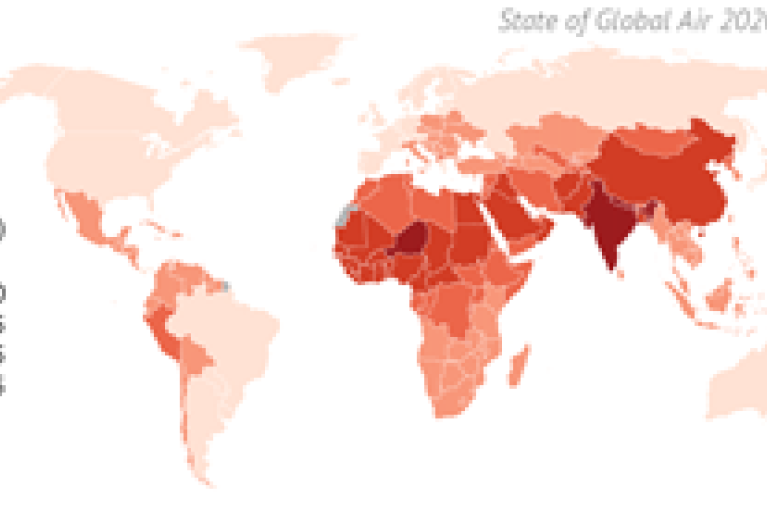
According to the State of Global Air Report 2024, outdoor air pollution was linked to about 8.1 million deaths globally in 2021.
-
WHO data highlight that nearly everyone globally (about 99%) breathes air that exceeds WHO guideline levels.
📌 Major country & city-level highlights
-
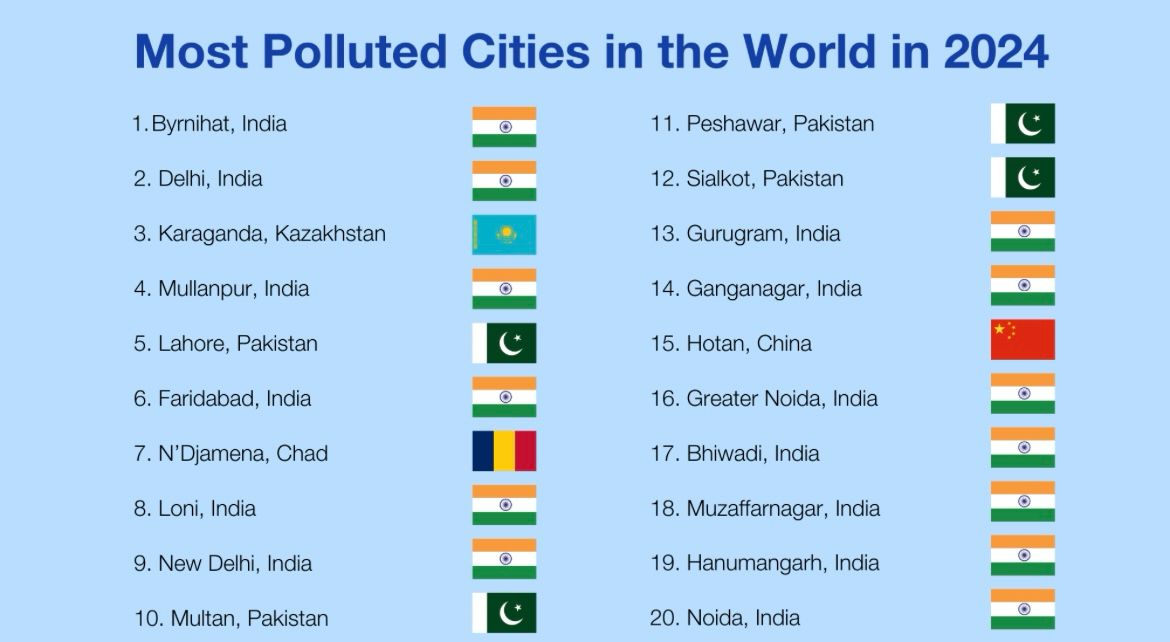
Cities in India dominate the global air-pollution rankings: for example, New Delhi was again listed among the world’s most polluted capitals in the 2024 report.
-
Some of the worst-polluted countries include Chad, Bangladesh, Pakistan and India.
-
Example statistic: one town in India (Byrnihat) recorded annual average PM₂.₅ concentrations of ~128 µg/m³.
🧬 Health & societal impacts
-
The burden of disease from air pollution includes stroke, heart disease, lung cancer, chronic respiratory diseases — these account for nearly 90% of the deaths related to outdoor air pollution in the “State of Global Air” report.
-
Air pollution also has large economic costs: increased healthcare spending, lower productivity, etc.
-
Monitoring remains weak in many regions (notably parts of Africa and West Asia) so the real situation may be worse than reported.
✅ Some bright spots & progress
-
More countries are adopting air-quality standards: as per WHO’s updated database, 17 % more countries now implement standards for key pollutants.
-
In certain regions, measurable improvements are occurring — for example better vehicle emissions standards, fuel changes, etc.
-
The fact that 17% of cities meet the guidelines is small but an improvement from previous years (eg: ~9%) according to commentary.
⚠️ Major challenges ahead
-
The gap between guideline levels (WHO) and real-world pollutant levels remains huge in many areas.
-
Many low- and middle-income countries bear the greatest burden, yet often have less monitoring/mitigation capacity.
-
Air-quality issues are tied to multiple sectors: transport, industry, energy, agriculture, waste. Addressing them requires systemic policy, infrastructure and investment.
-
The inter-link between air pollution and climate change means that climate policy and air-quality policy should go hand-in-hand.
Comments
Post a Comment